Vitamin E Guide
Inside this guide
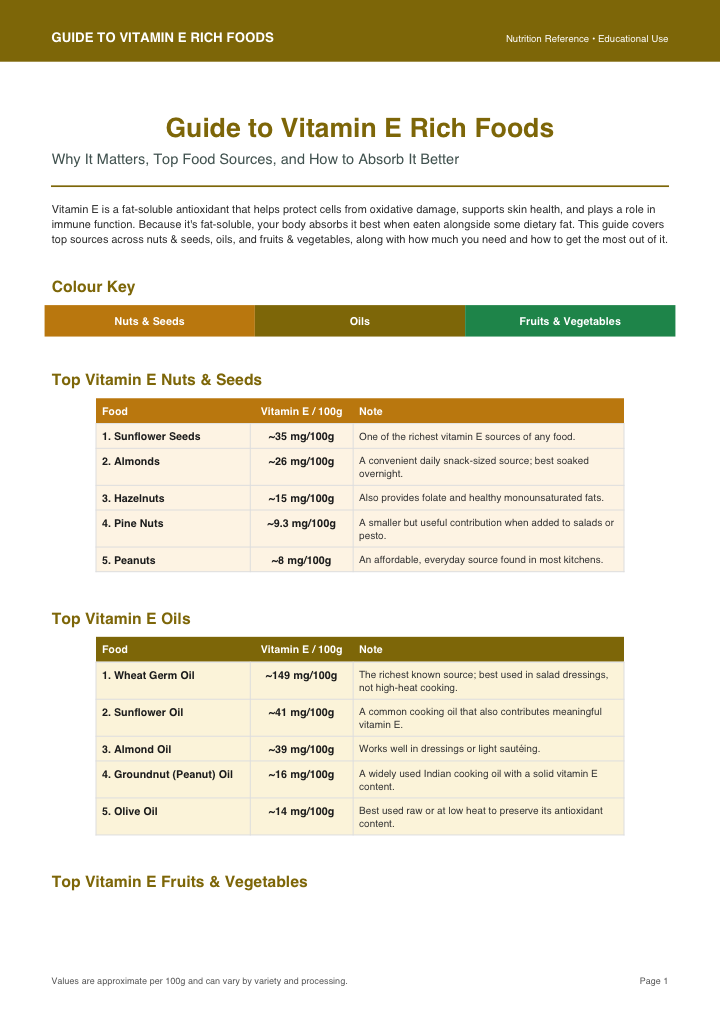
GUIDE TO VITAMIN E RICH FOODS Nutrition Reference Educational Use Values are approximate per 100g and can vary by variety and processing. Page 1 Guide to Vitamin E Rich Foods Why It Matters, Top Food Sources, and How to Absorb It Better Vitamin E is a fat-soluble antioxidant that helps protect cells from oxidative damage, supports skin health, and plays a role in immune function. Because it's fat-soluble, your body absorbs it best when eaten alongside some dietary fat. This guide covers top sources across nuts & seeds, oils, and fruits & vegetables, along with how much you need and how to get the most out of it. Colour Key Nuts & Seeds Oils Fruits & Vegetables Top Vitamin E Nuts & Seeds Food Vitamin E / 100g Note 1. Sunflower Seeds ~35 mg/100g One of the richest vitamin E sources of any food. 2. Almonds ~26 mg/100g A convenient daily snack-sized source; best soaked overnight. 3. Hazelnuts ~15 mg/100g Also provides folate and healthy monounsaturated fats. 4. Pine Nuts ~9.3 mg/100g A smaller but useful contribution when added to salads or pesto. 5. Peanuts ~8 mg/100g An affordable, everyday source found in most kitchens. Top Vitamin E Oils Food Vitamin E / 100g Note 1. Wheat Germ Oil ~149 mg/100g The richest known source; best used in salad dressings, not high-heat cooking. 2. Sunflower Oil ~41 mg/100g A common cooking oil that also contributes meaningful vitamin E. 3. Almond Oil ~39 mg/100g Works well in dressings or light sautéing. 4. Groundnut (Peanut) Oil ~16 mg/100g A widely used Indian cooking oil with a solid vitamin E content. 5. Olive Oil ~14 mg/100g Best used raw or at low heat to preserve its antioxidant content.…