Vitamin C Complete Guide
Inside this guide
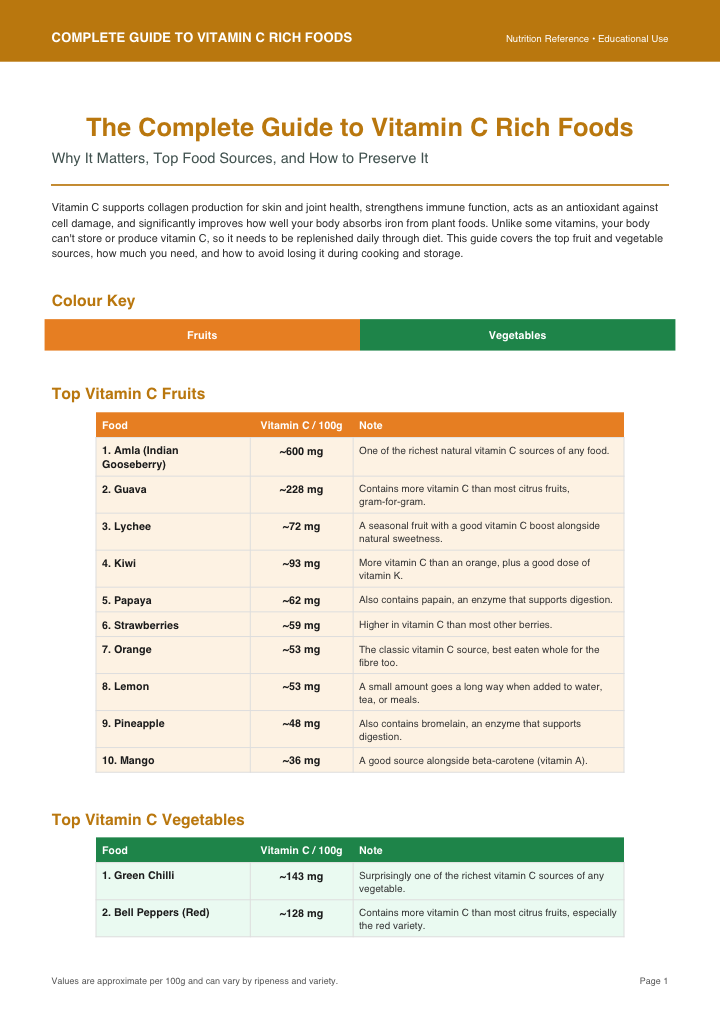
COMPLETE GUIDE TO VITAMIN C RICH FOODS Nutrition Reference Educational Use Values are approximate per 100g and can vary by ripeness and variety. Page 1 The Complete Guide to Vitamin C Rich Foods Why It Matters, Top Food Sources, and How to Preserve It Vitamin C supports collagen production for skin and joint health, strengthens immune function, acts as an antioxidant against cell damage, and significantly improves how well your body absorbs iron from plant foods. Unlike some vitamins, your body can't store or produce vitamin C, so it needs to be replenished daily through diet. This guide covers the top fruit and vegetable sources, how much you need, and how to avoid losing it during cooking and storage. Colour Key Fruits Vegetables Top Vitamin C Fruits Food Vitamin C / 100g Note 1. Amla (Indian Gooseberry) ~600 mg One of the richest natural vitamin C sources of any food. 2. Guava ~228 mg Contains more vitamin C than most citrus fruits, gram-for-gram. 3. Lychee ~72 mg A seasonal fruit with a good vitamin C boost alongside natural sweetness. 4. Kiwi ~93 mg More vitamin C than an orange, plus a good dose of vitamin K. 5. Papaya ~62 mg Also contains papain, an enzyme that supports digestion. 6. Strawberries ~59 mg Higher in vitamin C than most other berries. 7. Orange ~53 mg The classic vitamin C source, best eaten whole for the fibre too. 8. Lemon ~53 mg A small amount goes a long way when added to water, tea, or meals. 9. Pineapple ~48 mg Also contains bromelain, an enzyme that supports digestion. 10. Mango ~36 mg A good source alongside beta-carotene (vitamin A). Top Vitamin C Vegetables Food Vitamin C / 100g Note 1. Green Chilli ~143 mg Surprisingly one of the richest vitamin C sources of any vegetable. 2.…