Smart Swap Guide
Inside this guide
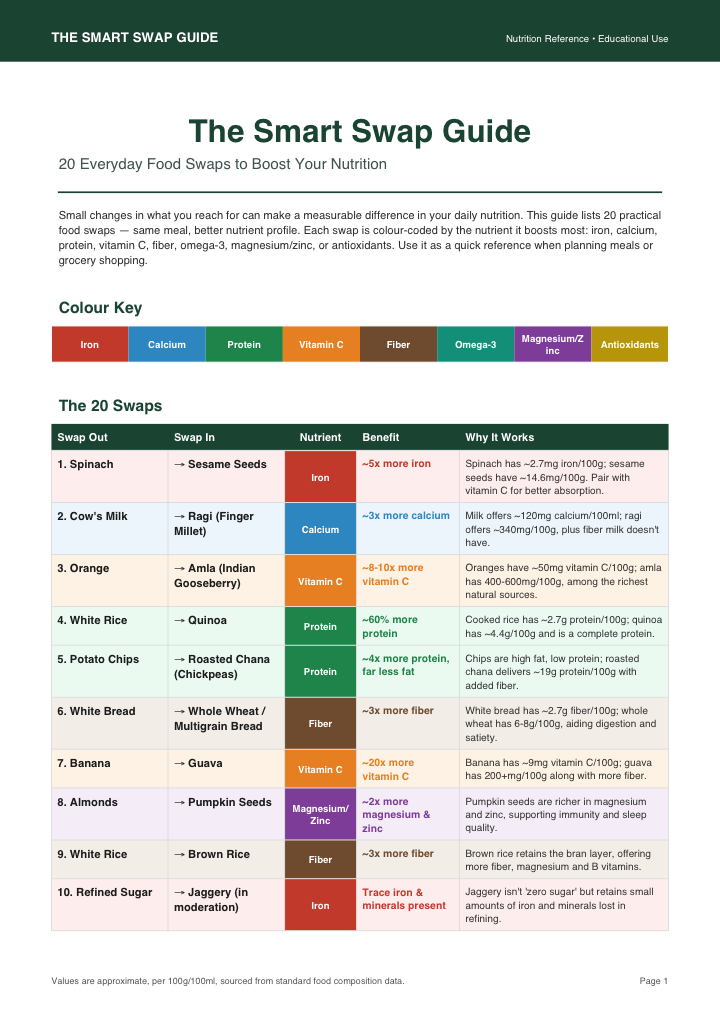
THE SMART SWAP GUIDE Nutrition Reference Educational Use Values are approximate, per 100g/100ml, sourced from standard food composition data. Page 1 The Smart Swap Guide 20 Everyday Food Swaps to Boost Your Nutrition Small changes in what you reach for can make a measurable difference in your daily nutrition. This guide lists 20 practical food swaps — same meal, better nutrient profile. Each swap is colour-coded by the nutrient it boosts most: iron, calcium, protein, vitamin C, fiber, omega-3, magnesium/zinc, or antioxidants. Use it as a quick reference when planning meals or grocery shopping. Colour Key Iron Calcium Protein Vitamin C Fiber Omega-3 Magnesium/Z inc Antioxidants The 20 Swaps Swap Out Swap In Nutrient Benefit Why It Works 1. Spinach → Sesame Seeds Iron ~5x more iron Spinach has ~2.7mg iron/100g; sesame seeds have ~14.6mg/100g. Pair with vitamin C for better absorption. 2. Cow's Milk → Ragi (Finger Millet) Calcium ~3x more calcium Milk offers ~120mg calcium/100ml; ragi offers ~340mg/100g, plus fiber milk doesn't have. 3. Orange → Amla (Indian Gooseberry) Vitamin C ~8-10x more vitamin C Oranges have ~50mg vitamin C/100g; amla has 400-600mg/100g, among the richest natural sources. 4. White Rice → Quinoa Protein ~60% more protein Cooked rice has ~2.7g protein/100g; quinoa has ~4.4g/100g and is a complete protein. 5. Potato Chips → Roasted Chana (Chickpeas) Protein ~4x more protein, far less fat Chips are high fat, low protein; roasted chana delivers ~19g protein/100g with added fiber. 6. White Bread → Whole Wheat / Multigrain Bread Fiber ~3x more fiber White bread has ~2.7g fiber/100g; whole wheat has 6-8g/100g, aiding digestion and satiety. 7.…