Period Bloating Cramps Guide
Inside this guide
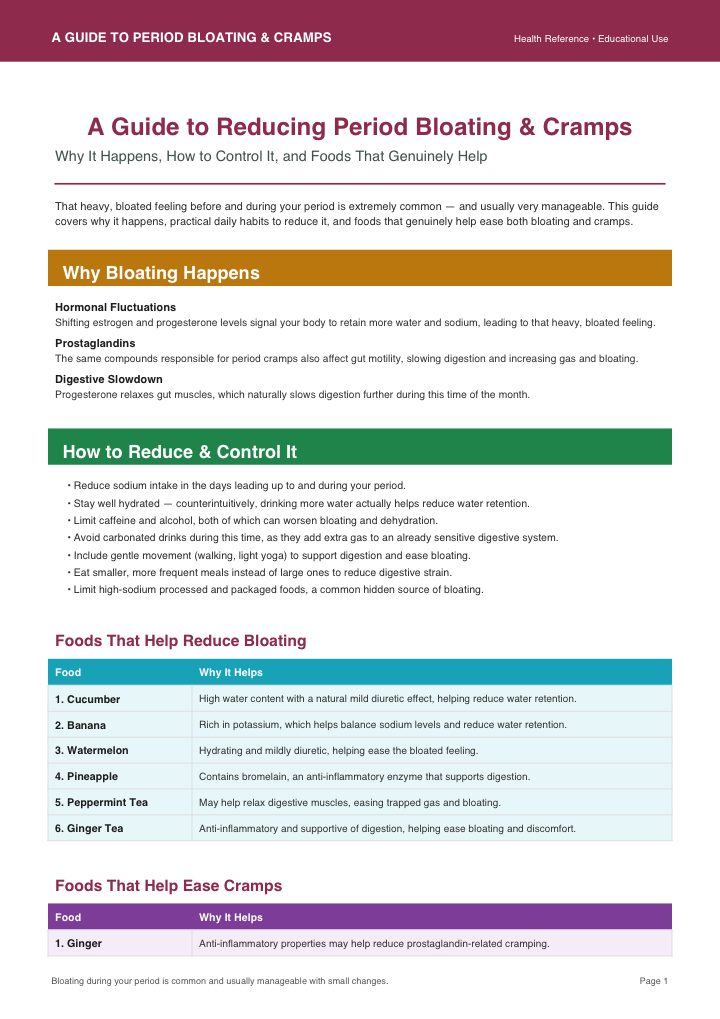
A GUIDE TO PERIOD BLOATING & CRAMPS Health Reference Educational Use Bloating during your period is common and usually manageable with small changes. Page 1 A Guide to Reducing Period Bloating & Cramps Why It Happens, How to Control It, and Foods That Genuinely Help That heavy, bloated feeling before and during your period is extremely common — and usually very manageable. This guide covers why it happens, practical daily habits to reduce it, and foods that genuinely help ease both bloating and cramps. Why Bloating Happens Hormonal Fluctuations Shifting estrogen and progesterone levels signal your body to retain more water and sodium, leading to that heavy, bloated feeling. Prostaglandins The same compounds responsible for period cramps also affect gut motility, slowing digestion and increasing gas and bloating. Digestive Slowdown Progesterone relaxes gut muscles, which naturally slows digestion further during this time of the month. How to Reduce & Control It Reduce sodium intake in the days leading up to and during your period. Stay well hydrated — counterintuitively, drinking more water actually helps reduce water retention. Limit caffeine and alcohol, both of which can worsen bloating and dehydration. Avoid carbonated drinks during this time, as they add extra gas to an already sensitive digestive system. Include gentle movement (walking, light yoga) to support digestion and ease bloating. Eat smaller, more frequent meals instead of large ones to reduce digestive strain. Limit high-sodium processed and packaged foods, a common hidden source of bloating. Foods That Help Reduce Bloating Food Why It Helps 1. Cucumber High water content with a natural mild diuretic effect, helping reduce water retention. 2.…