Nutrient Absorption Guide
Inside this guide
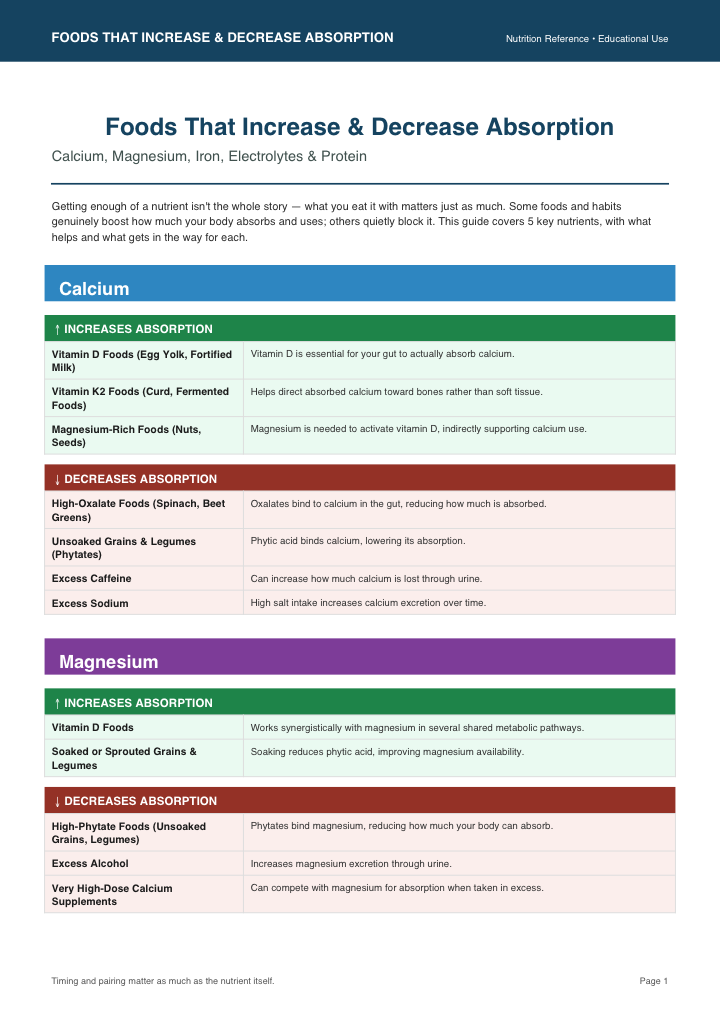
FOODS THAT INCREASE & DECREASE ABSORPTION Nutrition Reference Educational Use Timing and pairing matter as much as the nutrient itself. Page 1 Foods That Increase & Decrease Absorption Calcium, Magnesium, Iron, Electrolytes & Protein Getting enough of a nutrient isn't the whole story — what you eat it with matters just as much. Some foods and habits genuinely boost how much your body absorbs and uses; others quietly block it. This guide covers 5 key nutrients, with what helps and what gets in the way for each. Calcium ↑ INCREASES ABSORPTION Vitamin D Foods (Egg Yolk, Fortified Milk) Vitamin D is essential for your gut to actually absorb calcium. Vitamin K2 Foods (Curd, Fermented Foods) Helps direct absorbed calcium toward bones rather than soft tissue. Magnesium-Rich Foods (Nuts, Seeds) Magnesium is needed to activate vitamin D, indirectly supporting calcium use. ↓ DECREASES ABSORPTION High-Oxalate Foods (Spinach, Beet Greens) Oxalates bind to calcium in the gut, reducing how much is absorbed. Unsoaked Grains & Legumes (Phytates) Phytic acid binds calcium, lowering its absorption. Excess Caffeine Can increase how much calcium is lost through urine. Excess Sodium High salt intake increases calcium excretion over time. Magnesium ↑ INCREASES ABSORPTION Vitamin D Foods Works synergistically with magnesium in several shared metabolic pathways. Soaked or Sprouted Grains & Legumes Soaking reduces phytic acid, improving magnesium availability. ↓ DECREASES ABSORPTION High-Phytate Foods (Unsoaked Grains, Legumes) Phytates bind magnesium, reducing how much your body can absorb. Excess Alcohol Increases magnesium excretion through urine. Very High-Dose Calcium Supplements Can compete with magnesium for absorption when taken in excess.…