Macronutrients Guide
Inside this guide
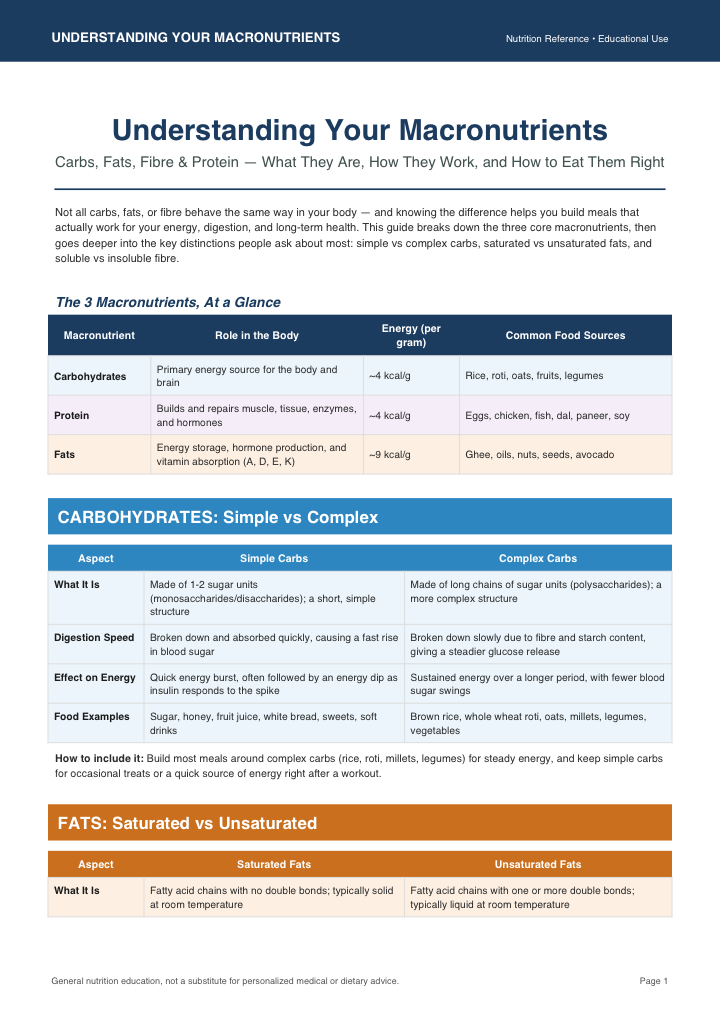
UNDERSTANDING YOUR MACRONUTRIENTS Nutrition Reference Educational Use General nutrition education, not a substitute for personalized medical or dietary advice. Page 1 Understanding Your Macronutrients Carbs, Fats, Fibre & Protein — What They Are, How They Work, and How to Eat Them Right Not all carbs, fats, or fibre behave the same way in your body — and knowing the difference helps you build meals that actually work for your energy, digestion, and long-term health. This guide breaks down the three core macronutrients, then goes deeper into the key distinctions people ask about most: simple vs complex carbs, saturated vs unsaturated fats, and soluble vs insoluble fibre. The 3 Macronutrients, At a Glance Macronutrient Role in the Body Energy (per gram) Common Food Sources Carbohydrates Primary energy source for the body and brain ~4 kcal/g Rice, roti, oats, fruits, legumes Protein Builds and repairs muscle, tissue, enzymes, and hormones ~4 kcal/g Eggs, chicken, fish, dal, paneer, soy Fats Energy storage, hormone production, and vitamin absorption (A, D, E, K) ~9 kcal/g Ghee, oils, nuts, seeds, avocado CARBOHYDRATES: Simple vs Complex Aspect Simple Carbs Complex Carbs What It Is Made of 1-2 sugar units (monosaccharides/disaccharides); a short, simple structure Made of long chains of sugar units (polysaccharides); a more complex structure Digestion Speed Broken down and absorbed quickly, causing a fast rise in blood sugar Broken down slowly due to fibre and starch content, giving a steadier glucose release Effect on Energy Quick energy burst, often followed by an energy dip as insulin responds to the spike Sustained energy over a longer period, with fewer blood sugar swings Food Examples Sugar, honey, fruit juice, white bread, sweets, soft drinks Brown rice, whole wheat…