Fibre Rich Foods Guide
Inside this guide
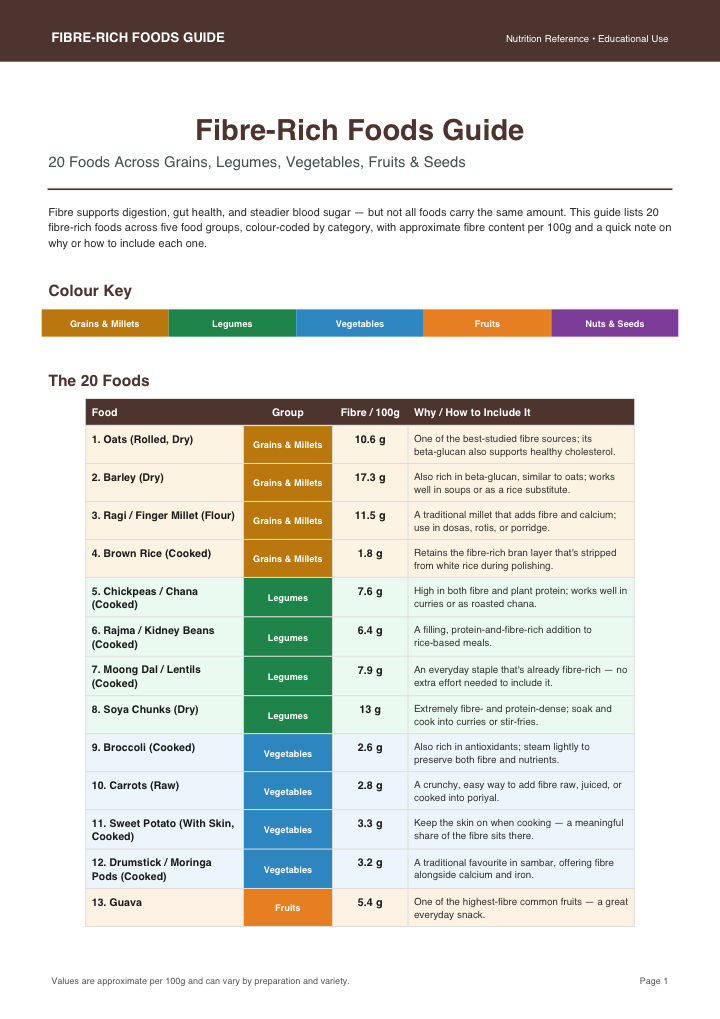
FIBRE-RICH FOODS GUIDE Nutrition Reference Educational Use Values are approximate per 100g and can vary by preparation and variety. Page 1 Fibre-Rich Foods Guide 20 Foods Across Grains, Legumes, Vegetables, Fruits & Seeds Fibre supports digestion, gut health, and steadier blood sugar — but not all foods carry the same amount. This guide lists 20 fibre-rich foods across five food groups, colour-coded by category, with approximate fibre content per 100g and a quick note on why or how to include each one. Colour Key Grains & Millets Legumes Vegetables Fruits Nuts & Seeds The 20 Foods Food Group Fibre / 100g Why / How to Include It 1. Oats (Rolled, Dry) Grains & Millets 10.6 g One of the best-studied fibre sources; its beta-glucan also supports healthy cholesterol. 2. Barley (Dry) Grains & Millets 17.3 g Also rich in beta-glucan, similar to oats; works well in soups or as a rice substitute. 3. Ragi / Finger Millet (Flour) Grains & Millets 11.5 g A traditional millet that adds fibre and calcium; use in dosas, rotis, or porridge. 4. Brown Rice (Cooked) Grains & Millets 1.8 g Retains the fibre-rich bran layer that's stripped from white rice during polishing. 5. Chickpeas / Chana (Cooked) Legumes 7.6 g High in both fibre and plant protein; works well in curries or as roasted chana. 6. Rajma / Kidney Beans (Cooked) Legumes 6.4 g A filling, protein-and-fibre-rich addition to rice-based meals. 7. Moong Dal / Lentils (Cooked) Legumes 7.9 g An everyday staple that's already fibre-rich — no extra effort needed to include it. 8. Soya Chunks (Dry) Legumes 13 g Extremely fibre- and protein-dense; soak and cook into curries or stir-fries. 9. Broccoli (Cooked) Vegetables 2.6 g Also rich in antioxidants; steam lightly to preserve both fibre and nutrients. 10.…