Dry Fruits Guide
Inside this guide
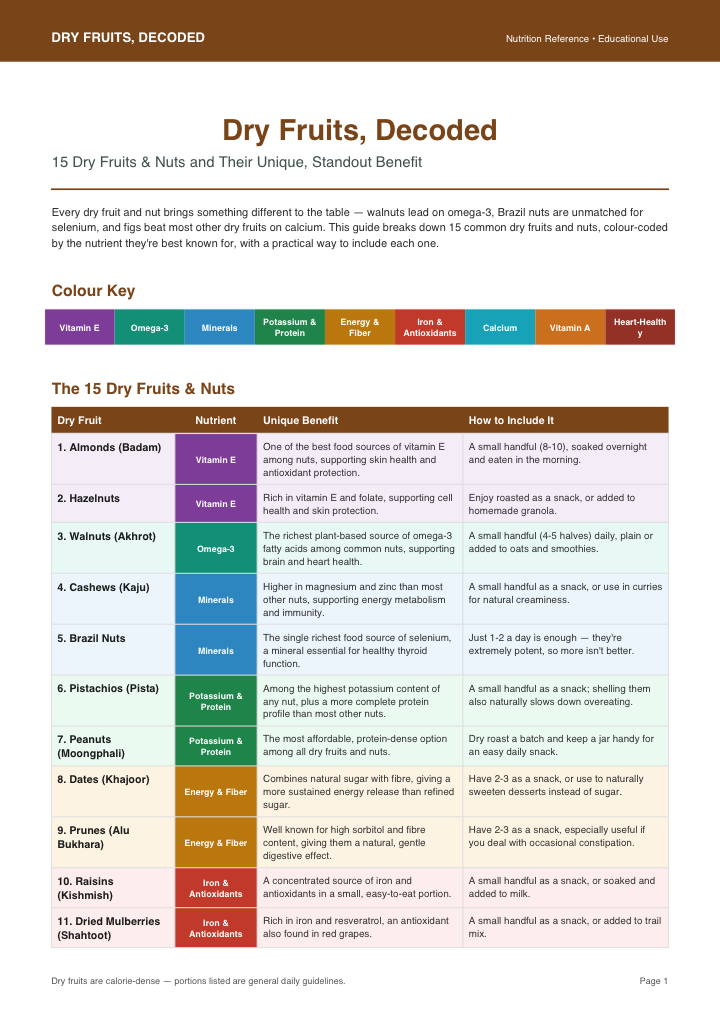
DRY FRUITS, DECODED Nutrition Reference Educational Use Dry fruits are calorie-dense — portions listed are general daily guidelines. Page 1 Dry Fruits, Decoded 15 Dry Fruits & Nuts and Their Unique, Standout Benefit Every dry fruit and nut brings something different to the table — walnuts lead on omega-3, Brazil nuts are unmatched for selenium, and figs beat most other dry fruits on calcium. This guide breaks down 15 common dry fruits and nuts, colour-coded by the nutrient they're best known for, with a practical way to include each one. Colour Key Vitamin E Omega-3 Minerals Potassium & Protein Energy & Fiber Iron & Antioxidants Calcium Vitamin A Heart-Health The 15 Dry Fruits & Nuts Dry Fruit Nutrient Unique Benefit How to Include It 1. Almonds (Badam) Vitamin E One of the best food sources of vitamin E among nuts, supporting skin health and antioxidant protection. A small handful (8-10), soaked overnight and eaten in the morning. 2. Hazelnuts Vitamin E Rich in vitamin E and folate, supporting cell health and skin protection. Enjoy roasted as a snack, or added to homemade granola. 3. Walnuts (Akhrot) Omega-3 The richest plant-based source of omega-3 fatty acids among common nuts, supporting brain and heart health. A small handful (4-5 halves) daily, plain or added to oats and smoothies. 4. Cashews (Kaju) Minerals Higher in magnesium and zinc than most other nuts, supporting energy metabolism and immunity. A small handful as a snack, or use in curries for natural creaminess. 5. Brazil Nuts Minerals The single richest food source of selenium, a mineral essential for healthy thyroid function. Just 1-2 a day is enough — they're extremely potent, so more isn't better. 6.…