Deficiency Foods Guide
Inside this guide
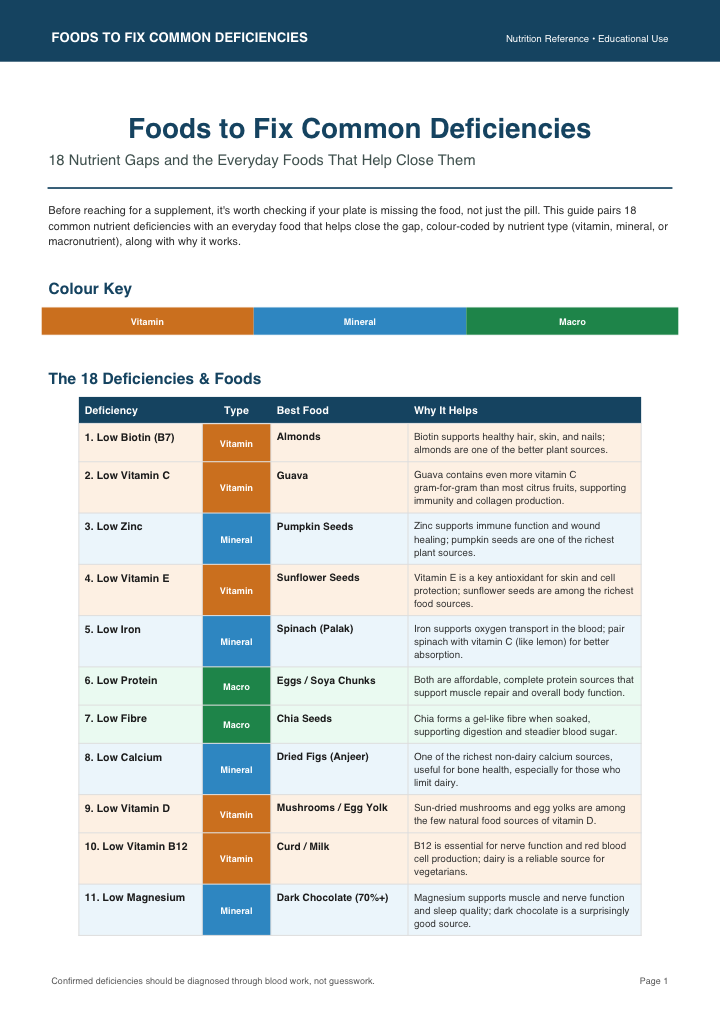
FOODS TO FIX COMMON DEFICIENCIES Nutrition Reference Educational Use Confirmed deficiencies should be diagnosed through blood work, not guesswork. Page 1 Foods to Fix Common Deficiencies 18 Nutrient Gaps and the Everyday Foods That Help Close Them Before reaching for a supplement, it's worth checking if your plate is missing the food, not just the pill. This guide pairs 18 common nutrient deficiencies with an everyday food that helps close the gap, colour-coded by nutrient type (vitamin, mineral, or macronutrient), along with why it works. Colour Key Vitamin Mineral Macro The 18 Deficiencies & Foods Deficiency Type Best Food Why It Helps 1. Low Biotin (B7) Vitamin Almonds Biotin supports healthy hair, skin, and nails; almonds are one of the better plant sources. 2. Low Vitamin C Vitamin Guava Guava contains even more vitamin C gram-for-gram than most citrus fruits, supporting immunity and collagen production. 3. Low Zinc Mineral Pumpkin Seeds Zinc supports immune function and wound healing; pumpkin seeds are one of the richest plant sources. 4. Low Vitamin E Vitamin Sunflower Seeds Vitamin E is a key antioxidant for skin and cell protection; sunflower seeds are among the richest food sources. 5. Low Iron Mineral Spinach (Palak) Iron supports oxygen transport in the blood; pair spinach with vitamin C (like lemon) for better absorption. 6. Low Protein Macro Eggs / Soya Chunks Both are affordable, complete protein sources that support muscle repair and overall body function. 7. Low Fibre Macro Chia Seeds Chia forms a gel-like fibre when soaked, supporting digestion and steadier blood sugar. 8. Low Calcium Mineral Dried Figs (Anjeer) One of the richest non-dairy calcium sources, useful for bone health, especially for those who limit dairy. 9.…