Complete Hair Care Guide
Inside this guide
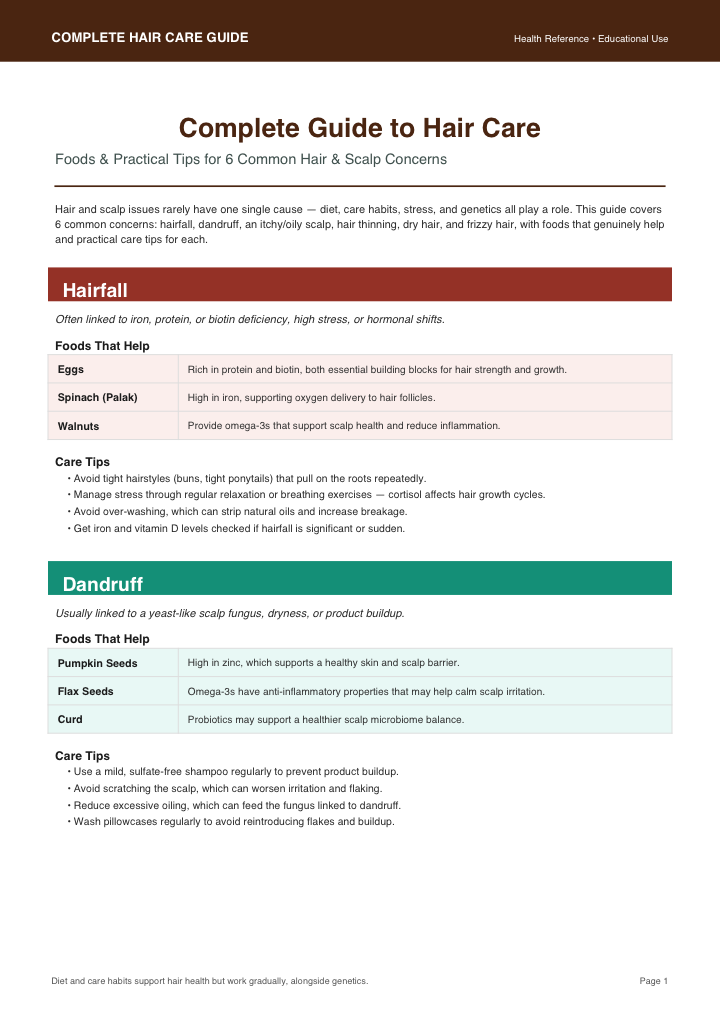
COMPLETE HAIR CARE GUIDE Health Reference Educational Use Diet and care habits support hair health but work gradually, alongside genetics. Page 1 Complete Guide to Hair Care Foods & Practical Tips for 6 Common Hair & Scalp Concerns Hair and scalp issues rarely have one single cause — diet, care habits, stress, and genetics all play a role. This guide covers 6 common concerns: hairfall, dandruff, an itchy/oily scalp, hair thinning, dry hair, and frizzy hair, with foods that genuinely help and practical care tips for each. Hairfall Often linked to iron, protein, or biotin deficiency, high stress, or hormonal shifts. Foods That Help Eggs Rich in protein and biotin, both essential building blocks for hair strength and growth. Spinach (Palak) High in iron, supporting oxygen delivery to hair follicles. Walnuts Provide omega-3s that support scalp health and reduce inflammation. Care Tips Avoid tight hairstyles (buns, tight ponytails) that pull on the roots repeatedly. Manage stress through regular relaxation or breathing exercises — cortisol affects hair growth cycles. Avoid over-washing, which can strip natural oils and increase breakage. Get iron and vitamin D levels checked if hairfall is significant or sudden. Dandruff Usually linked to a yeast-like scalp fungus, dryness, or product buildup. Foods That Help Pumpkin Seeds High in zinc, which supports a healthy skin and scalp barrier. Flax Seeds Omega-3s have anti-inflammatory properties that may help calm scalp irritation. Curd Probiotics may support a healthier scalp microbiome balance. Care Tips Use a mild, sulfate-free shampoo regularly to prevent product buildup. Avoid scratching the scalp, which can worsen irritation and flaking. Reduce excessive oiling, which can feed the fungus linked to dandruff.…